Welcome to SIDUR.NET!
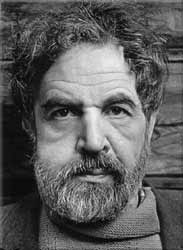
This site is dedicated to the work of the Russian sculptor and graphic artist Vadim Sidur (1924-1986).
Vadim Sidur was born in Dnepopetrovsk in 1924. He was drafted to the Red Army in 1942 and participated in the battles around his home-town, where he was wounded in the jaw by a German sniper's bullet. During his convalescence, Sidur abandoned his original plans of studying medicine and entered the Stroganov-Insitute in Moscow. Here, he was trained in the heroic canon of official Stalinist art. During the 1950s, he began to depart from this canon, until finally abandoning it completely in 1959.
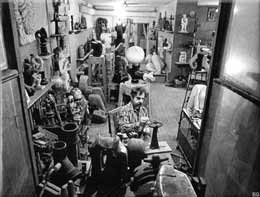
In the following twenty-seven years, Vadim Sidur created a rich world that includes sculptures and assemblages as well an extensive oeuvre of works on paper and in other graphic media. He is most well-known for his monumental sculptures, which find a laconic-reductive language for the experiences of war beyond the heroic canon of Soviet sculpture.
Fusing a deeply lyrical approach to form and theme with the drama of war-experiences, Sidur continuously returned to a number of "eternal" themes througout his work. Aside from the experiences of war, these included sexuality, violence, the family, and the metamorphic repertoire of myth. In the course of his artistic development, Sidur grew increasingly concerned with the potential apocalyptic consequences of war, which seemed inevitable in the Cold War's precarious balance of terror. Nevertheless, there is also great deal of lightness and lyricism in Sidur's oeuvre, supplying a counterweight to the drama and tragedy of his monuments and his apocalyptic assemblages.
As a "nonconformist" in both style and thematic content, Vadim Sidur was largely ignored by the Soviet art-institutions. Nevertheless, his work received a great deal of acclaim in the countries of Eastern and Western Europe throughout the 1970s and 1980s. This reception was especially warm in West Germany, where his monumental sculptures were installed in a number of towns and cities.
During the 1980s, Vadim Sidur's health steadily worsened, until he died of heart-disease in 1986. After his death, in the course of the Perestroika, his works could finally be shown to the Russian public. In 1991, following the broad success of his exhibitions, the City of Moscow established a museum for his oeuvre in the Perovo district, which is directed by Sidur's son Mikhail.
Aside from numerous grave memorials, two large monumental sculptures have been installed in Russia, where Sidur's work continues to attract a great deal of attention.
In Western Europe and the USA, Sidur's work also contained to receive attention in a number of post-humous exhibitions and publications. His works were also acquired by several important collections of sculpture and of Russian "nonconformist" art. Most recently, Vadim Sidur's work was presented in a book/CD-ROM publication. The publication, which contains numerous new approaches to Sidur's work, also includes a complete catalogue of his sculptural work, as well as a great deal of background information. It appeared as a publication of the Lotman-Institute for Russian and Soviet Culture in April 2000.
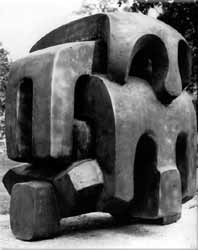
Vadim Sidur, Treblinka, 1965; installed in Berlin-Charlottenburg in 1979